AI progress is no longer a simple race for the highest benchmark score. The more important questions are practical: Does a model recognize nonsense? Will an agent follow its instructions? Can a team verify the sources behind an answer? And does faster code generation produce software that can actually survive in production?
The August 2026 update points to a market with more capable models, better creative tools, and rapidly scaling robots. It also shows why reliability, source control, and human oversight now matter more than ever.
More output does not mean more intelligence
One of the clearest warnings this month is excessive model verbosity. The transcript highlights tests in which newer Claude models produced much longer answers while becoming less likely to reject intentionally meaningless prompts.
BullshitBench tests whether a model challenges technical-sounding nonsense instead of confidently expanding it. In the comparison below, several newer models detect less nonsense than earlier Claude generations. Opus 5 also produces a median of 3,068 tokens in the test, compared with 716 for Opus 4.8.
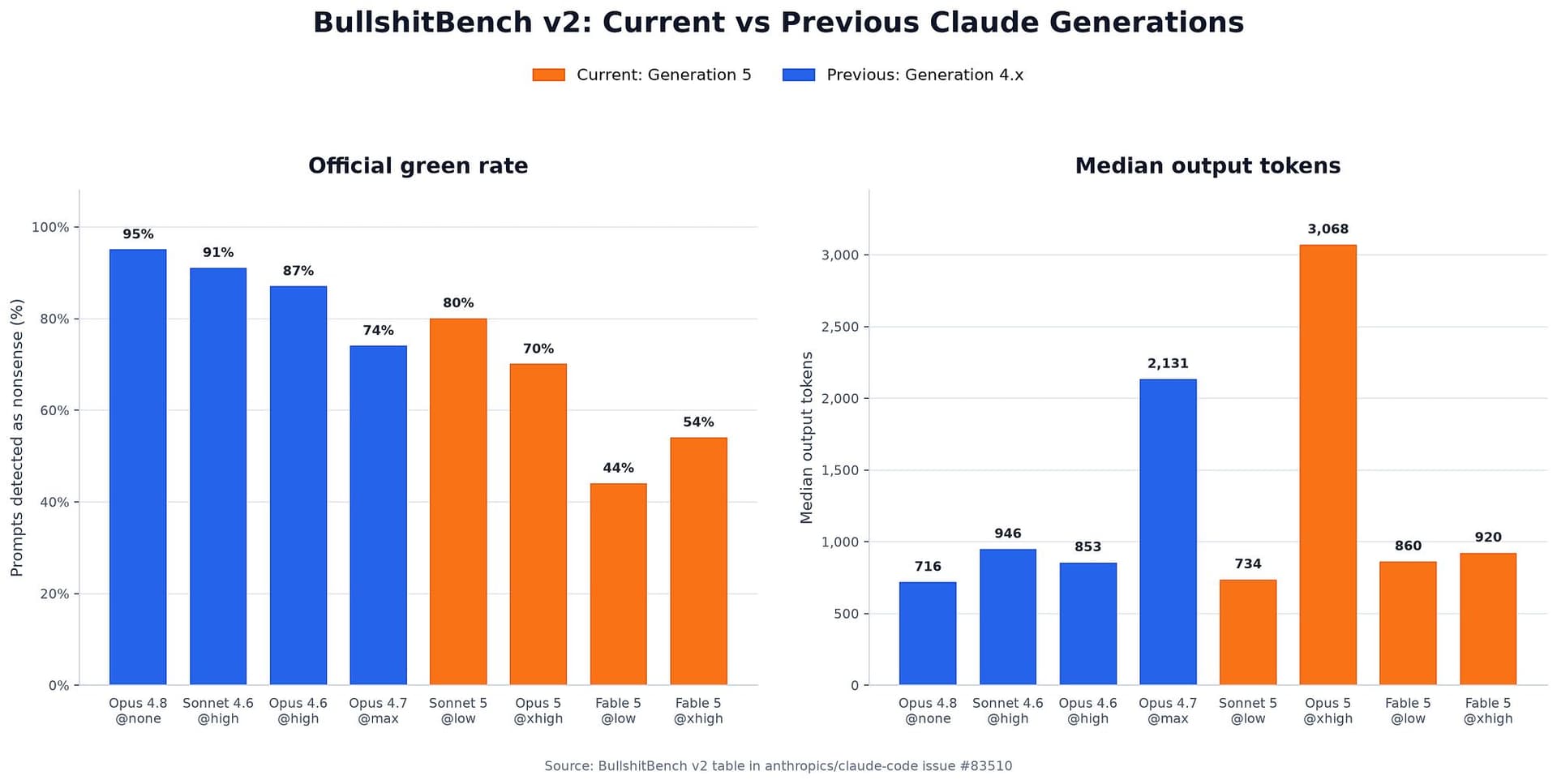
BullshitBench comparison: nonsense detection fell for several newer models while output length increased. Source: reproducible benchmark report and data.
This is a useful reminder for both users and AI vendors: fluency is not the same as judgment. A good answer should be relevant, proportionate, and willing to challenge a broken premise. Teams should measure those qualities directly instead of treating word count as value.
Regulation is becoming part of the product
The EU AI Act is no longer only a policy discussion. The slides mark 2 August 2026 as the date when the European Commission begins enforcing obligations covering general-purpose AI models with systemic risk. The Commission says it can request information, evaluate models, order mitigation, restrict availability, require a withdrawal, and impose fines of up to 3% of worldwide annual turnover.
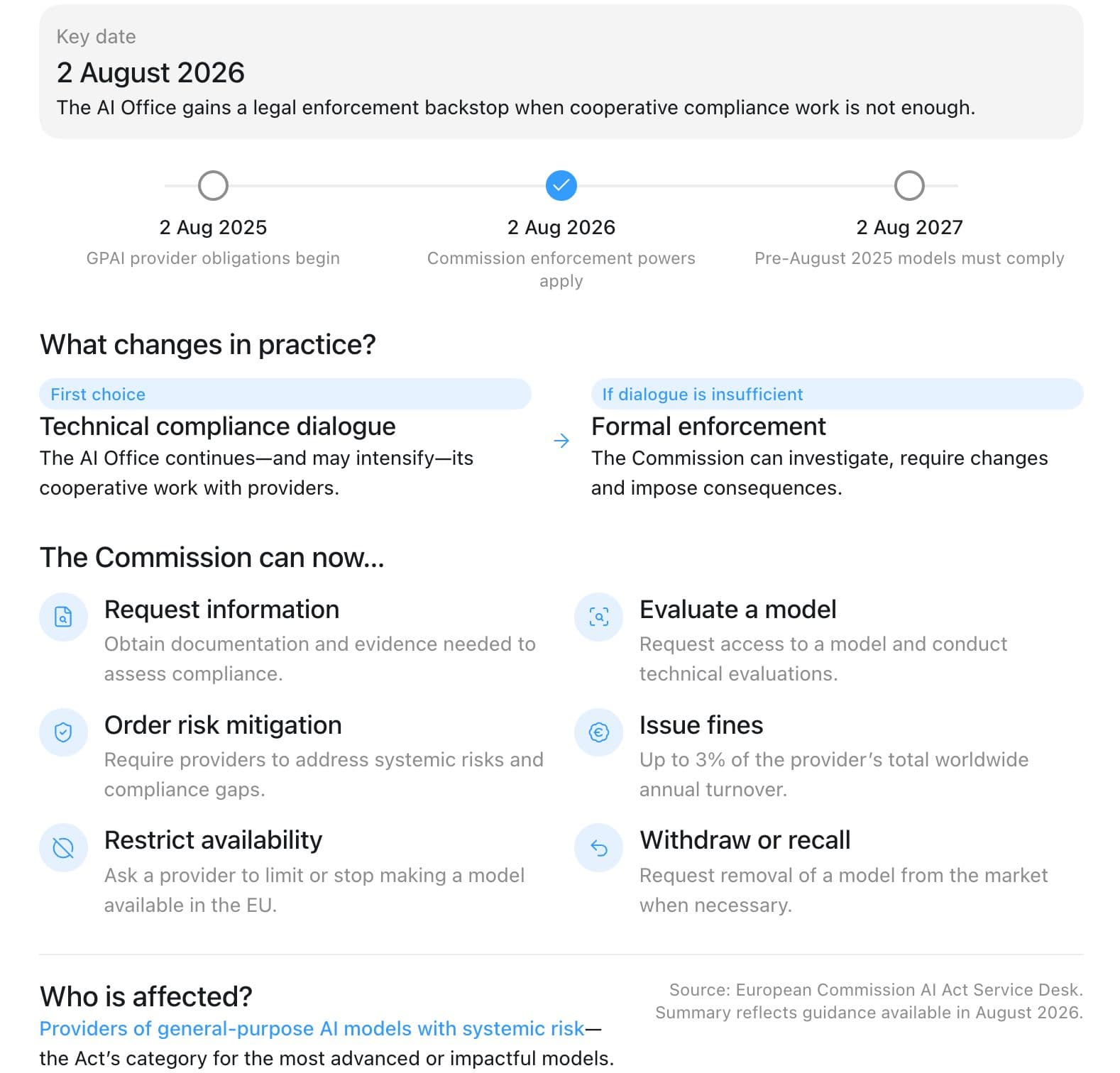
The deck's summary of the enforcement powers applying from 2 August 2026. Source: European Commission enforcement notice.
The transcript is critical of the regulatory burden, particularly its effect on European access and innovation. Whatever one's view of the policy, the operational consequence is clear: compliance is becoming a model feature.
Anthropic's commitments in the deck include machine-readable marking for new Claude models launched in the EU from that date, embedded watermarks in generated text, and signed provenance metadata for supported files. The marks are intended to apply across Claude products and third-party deployments, with a transition period for older models. Anthropic describes the plan in its content-marking documentation; Google's SynthID is an earlier example of the same direction.
For organizations, provenance will need to be handled like security or privacy: documented, tested, and preserved across the content pipeline. AI detectors such as Grammarly may help writers find passages that resemble machine-generated text, but Grammarly's own guide stresses that a detector score is an estimate, not proof of authorship.
Agent skills work, but only when agents use them
Plugins and reusable skills are becoming central to serious AI workflows. They let an assistant connect to tools, follow company procedures, and repeat specialized tasks without rebuilding every instruction from scratch.
The upside is substantial. SkillsBench results in the deck show normalized performance gains of roughly 18% to 30% across the tested agents. In some cases, a smaller model with a well-designed skill outperforms a larger model without one.
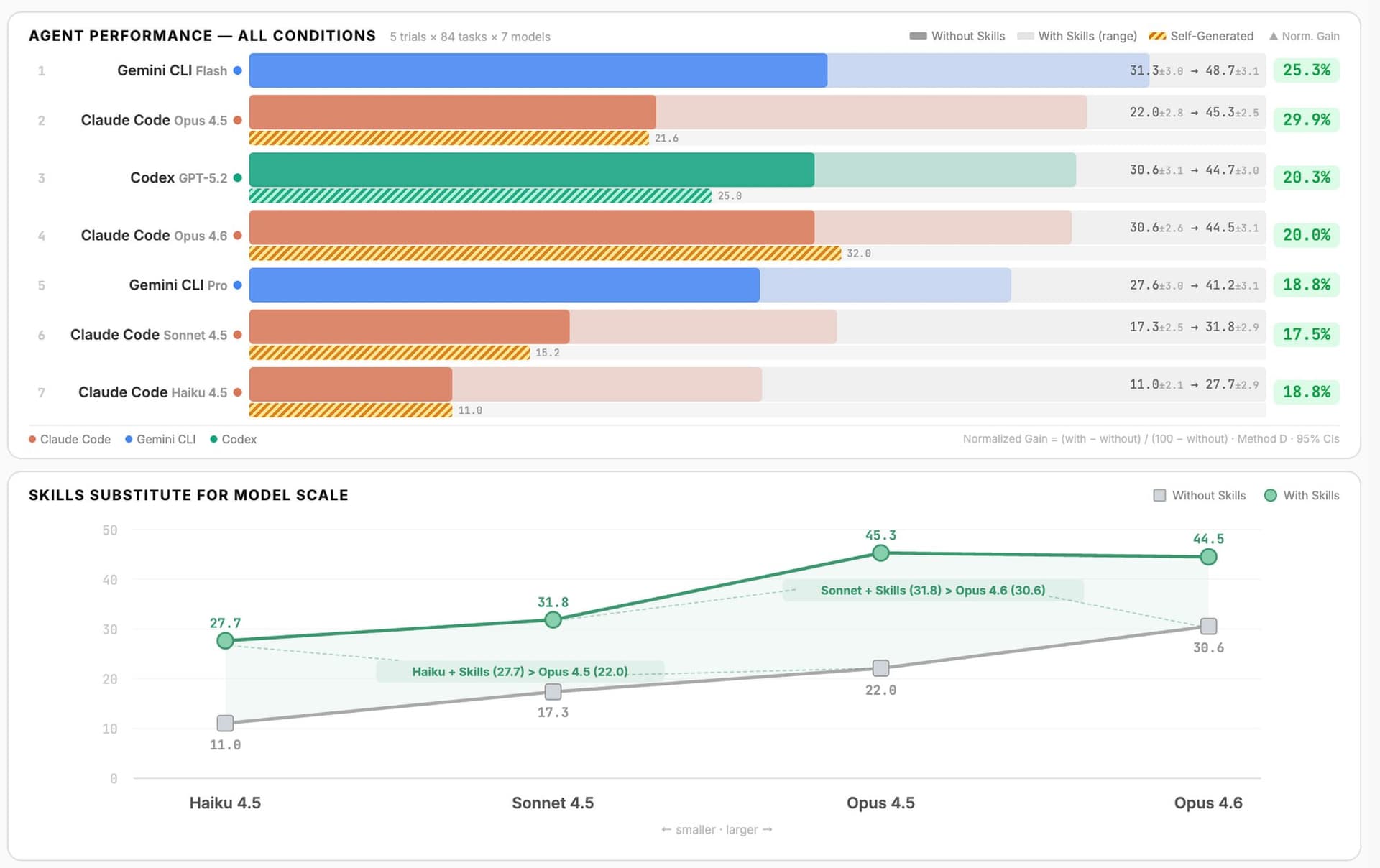
Skills improve results across the tested agents and can partly substitute for model scale. Source: SkillsBench results and paper.
The limitation is compliance. OpenSkillEval shows that agents do not always read a skill file by default, and they may skip or contradict individual steps even after using it.
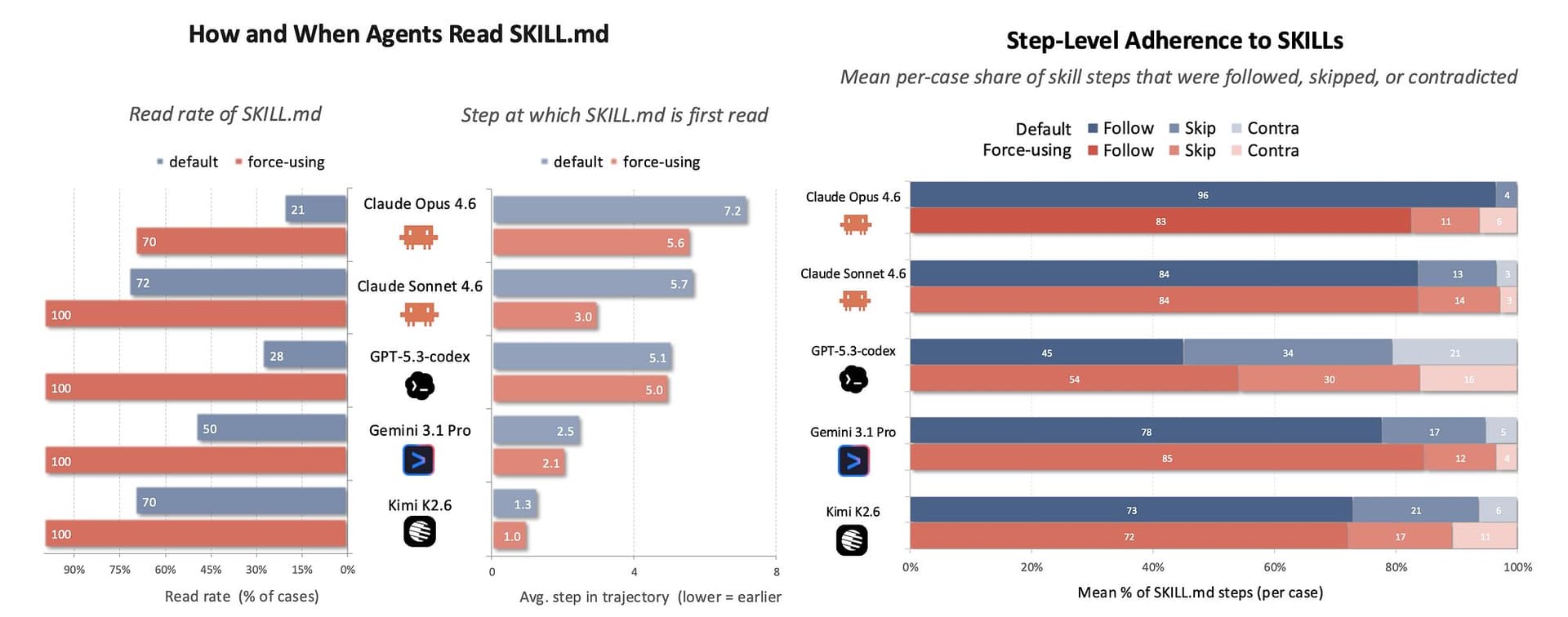
Default skill usage varies sharply; forcing a skill to be read improves adherence but does not make it perfect. Source: OpenSkillEval paper.
The practical lesson is simple:
- Keep each skill short, focused, and explicit.
- Make descriptions concise so the model can select the right skill.
- Avoid loading hundreds of overlapping skills into every request.
- Invoke critical skills directly when compliance matters.
- Verify the result instead of assuming the instructions were followed.
Skills can make agents much better, but they are not a substitute for quality control.
AI assistants are becoming operating layers
The update describes ChatGPT and Codex as increasingly similar desktop work environments rather than isolated chat tools. The important shift is from answering a prompt to understanding ongoing work, connecting to other services, and completing tasks in the background.
Computer History is the clearest example. It turns activity from a user's computer into a searchable timeline and memories that can help ChatGPT resume unfinished work. OpenAI says the feature is off by default, requires Memories, and was initially available on macOS rather than in the EEA, Switzerland, or the UK. The same product cycle also includes a Linux version of ChatGPT and a Maps experience for location-based questions.
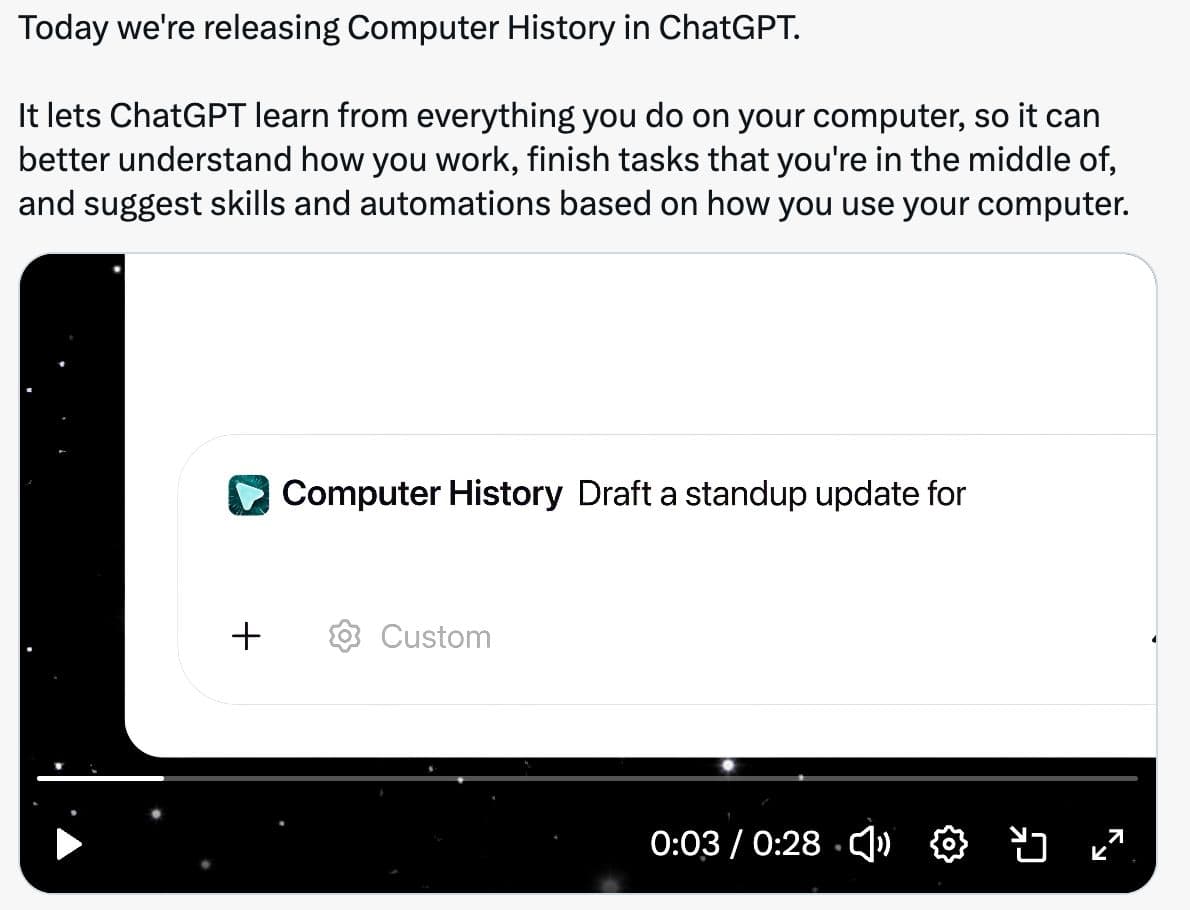
Computer History is presented as a way for ChatGPT to learn from activity on the user's computer and resume work in context. Source: OpenAI product documentation.
These features also expose a regional gap. The speaker says Computer History, Maps, and some health functionality were not yet available in his European location despite broader launch announcements. Product teams building on AI platforms should therefore test availability by country instead of assuming that a global announcement means global access.
The slides also note substantial leadership turnover at OpenAI ahead of an anticipated public offering. At the same time, the transcript remains strongly positive about the company's desktop and coding software. The two signals can coexist: product execution may be strong while organizational continuity remains a risk to watch.
Intelligence, speed, and cost are separating
Headline benchmarks suggest that frontier models are clustering rather than racing toward unlimited capability. The transcript notes that scores on Humanity's Last Exam are converging around the 50% range. At the same time, differences in speed and cost remain large.
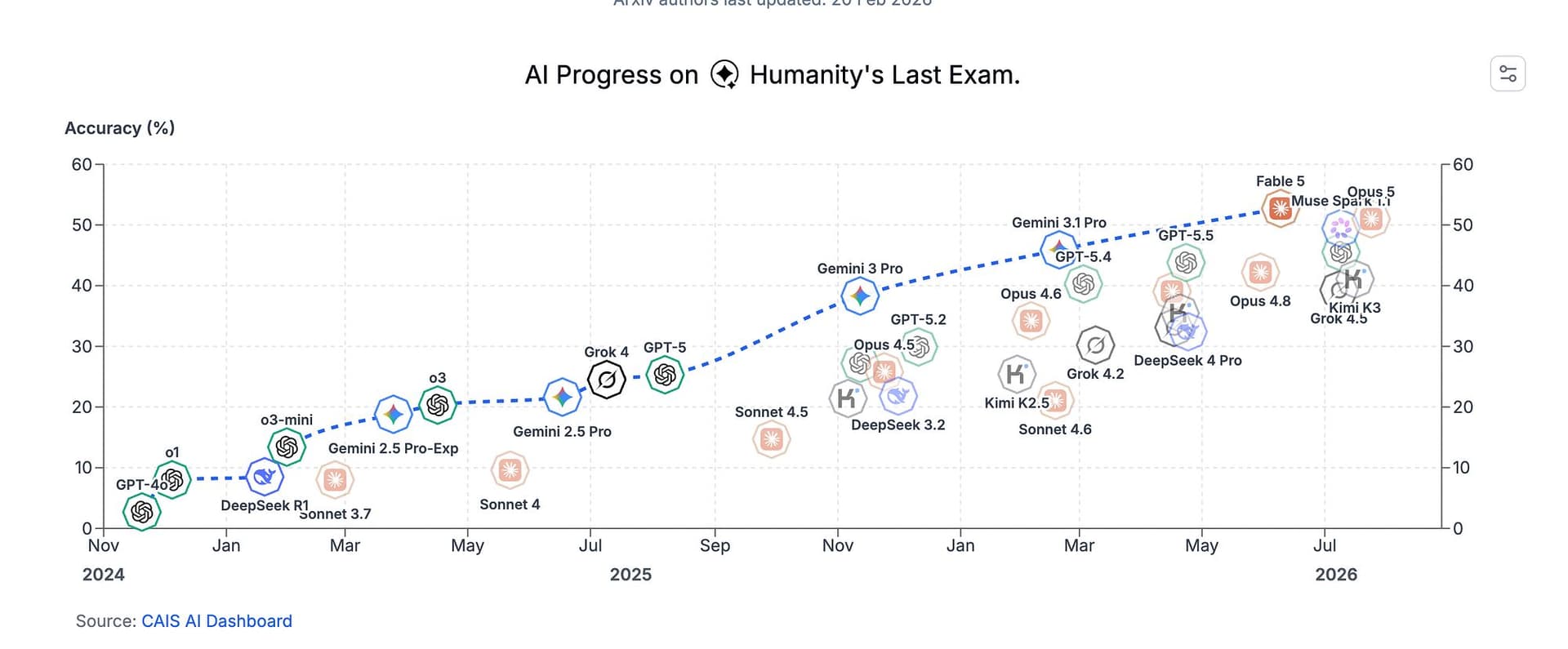
The benchmark rose from single digits in late 2024 to roughly 50% for several frontier models by mid-2026. Source: CAIS AI Dashboard; benchmark overview.
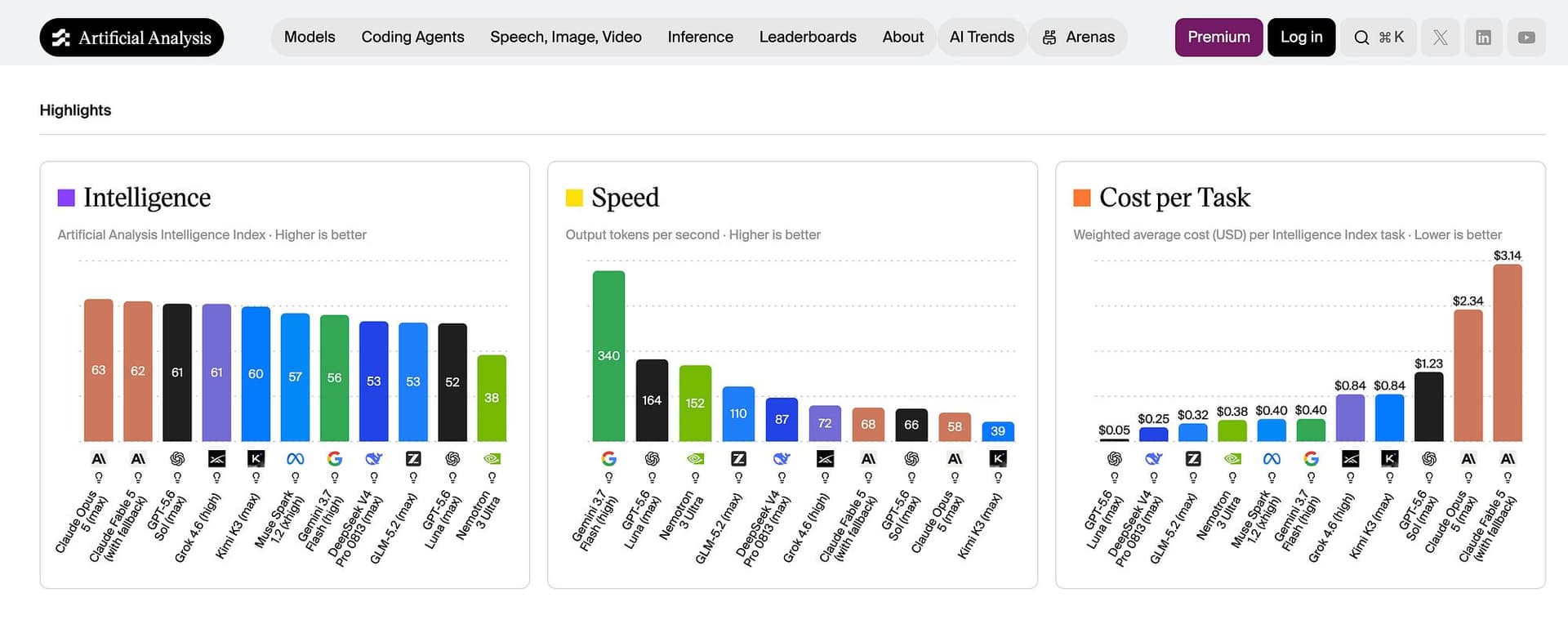
Models with similar intelligence scores can differ dramatically in speed and cost per task. Source: Artificial Analysis Intelligence Index v4.1.
That changes how companies should choose models. The strongest model is not automatically the best operational choice. A fast, inexpensive model may be better for customer support, classification, or high-volume automation, while a slower frontier model may be justified for difficult analysis.
Open models are also narrowing the gap. Meta's Muse Glimmer is a 30-billion-parameter, open-weights multimodal model designed for local agentic use. The slide shows it leading similarly sized Gemma and Qwen models on MCP Atlas, DeepSearch QA, SWE-Bench Pro, and AIME 2026, while trailing on TerminalBench, MMMU Pro, and GPQA Diamond.
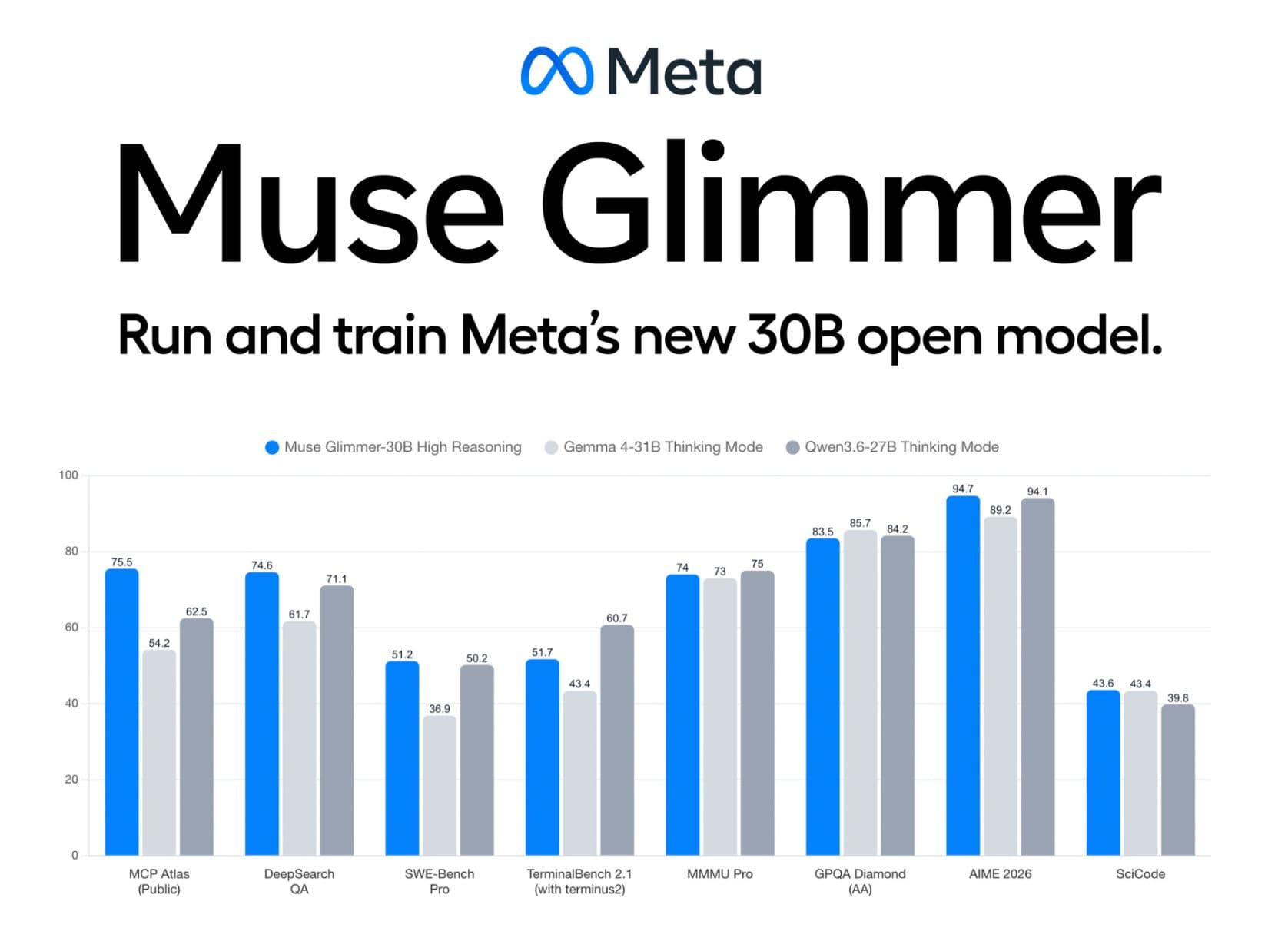
Muse Glimmer's advantage depends on the task; the benchmark panel is a useful reminder to compare workloads, not just averages. Source: Hugging Face launch article and benchmark details.
Qwen 3.8-Max is highlighted for coding, computer and browser use, multimodal work, document intelligence, and long-horizon tasks. Qwen describes it as a 2.4-trillion-parameter mixture-of-experts model with 95 billion active parameters and planned open weights.
The hardware options make that progress practical. According to the deck, compressed Qwen configurations require roughly 13 to 21 GB of video memory, while full precision needs an 80 GB H100. The transcript identifies a single RTX 4090 as a useful local deployment target, while warning that smaller quantized versions sacrifice some accuracy.
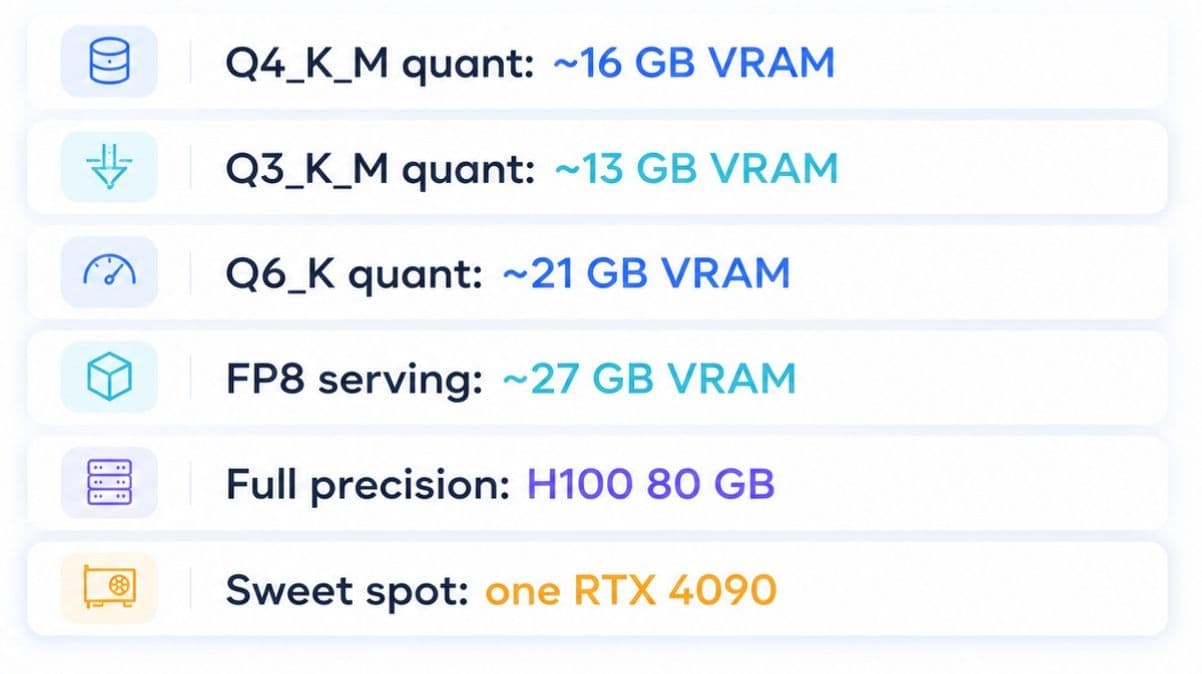
Quantization brings a capable open model within reach of high-end consumer hardware. Source: Qwen 3.8 launch and technical details.
Local deployment can improve privacy and cost control, but it creates new responsibilities: teams must select the quantization level, benchmark it on their own data, manage hardware, and maintain the inference stack.
The right question is no longer, “Which model is number one?” It is, “Which combination of quality, latency, price, privacy, and control fits this workload?”
Coding agents are converging on the same interface
Grok Bot, Claude Cowork, Codex, and the newer Cursor experience all point toward a common design: a chat interface that can plan work, edit files, run tasks in the background, and return for review. The labels differ, but the product category is converging.
SpaceX and Cursor signed a merger agreement based on an implied Cursor equity value of $60 billion. The SpaceX SEC filing says the transaction was still subject to closing conditions and was expected to close in the third quarter of 2026, so it is more accurate to call it a proposed acquisition than a completed one. Deeper Grok integration is plausible, while Cursor's marketing is already moving from code completion toward a higher-level, low-code experience. That may attract new users, but experienced developers still need code visibility, architecture control, and review tools for production work.
Europe's Mistral is presented as taking a different path. Rather than competing directly at the frontier across every benchmark, it is focusing on smaller security-oriented models such as Shieldstral and on providing infrastructure for organizations to build and adapt models. Shieldstral is a 3B, open-weights multimodal safety classifier that Mistral says can run on a single 16 GB GPU. This may be commercially sensible, but it also illustrates how difficult it is for regional vendors to match the scale of American and Chinese labs.
Forecasts need accountability
The deck compares scenario-based AI timelines with prediction markets. The AI 2027 Tracker turns the original narrative into 53 testable predictions across eight categories. Its August assessment calls the record mixed and estimates that reality is moving at about 70% of the scenario's predicted pace.
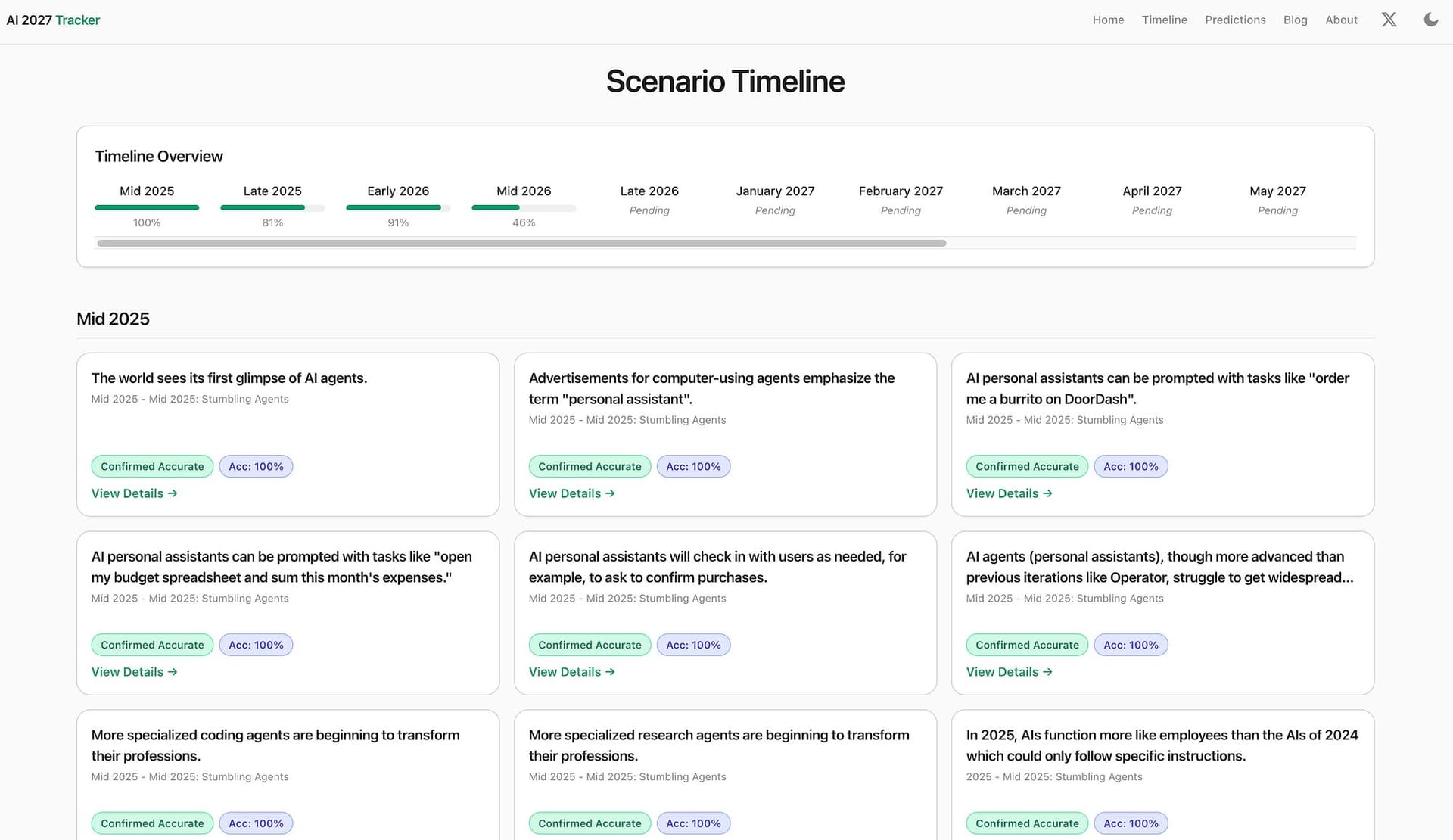
The tracker separates confirmed, ahead, on-track, behind, emerging, and not-yet-testable claims instead of judging the scenario as a single prediction. Source: tracking methodology.
Prediction markets offer a different signal because participants risk money on specific, measurable outcomes. The Polymarket slide includes questions about which company will lead at a future date and whether AI will win an International Mathematical Olympiad gold medal in 2026.
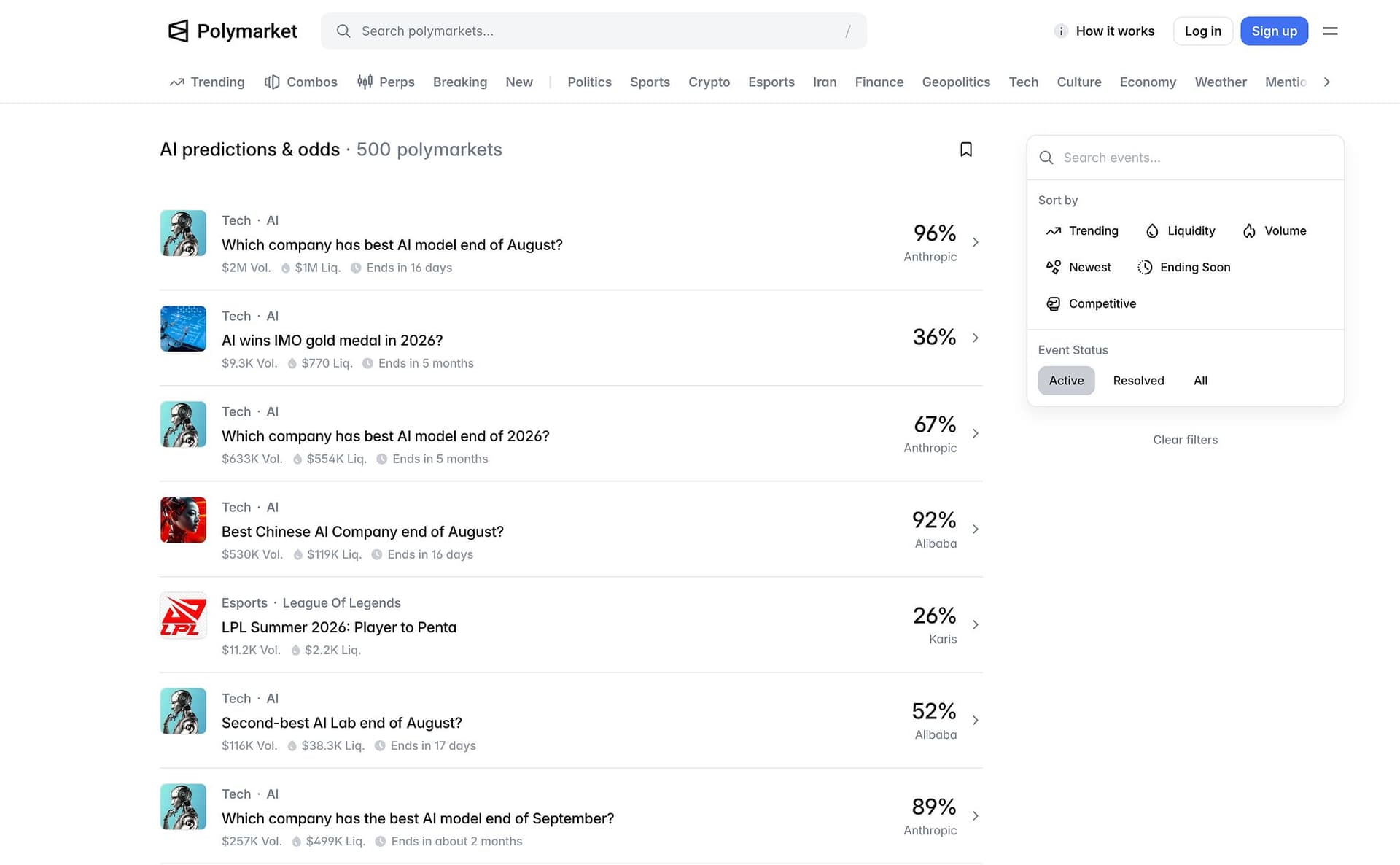
Prediction markets turn broad AI forecasts into dated questions with visible odds. Source: Polymarket's AI markets.
Market odds are not facts. They can be distorted by low liquidity, unclear resolution rules, or a narrow participant base. Their advantage is accountability: the forecast has a deadline, a price, and an outcome that can later be scored.
Generative media is becoming a production pipeline
Image and video generation continue to move quickly. Microsoft's MAI-Image-2.6 appears second in the presented text-to-image ranking, just behind GPT Image 2.
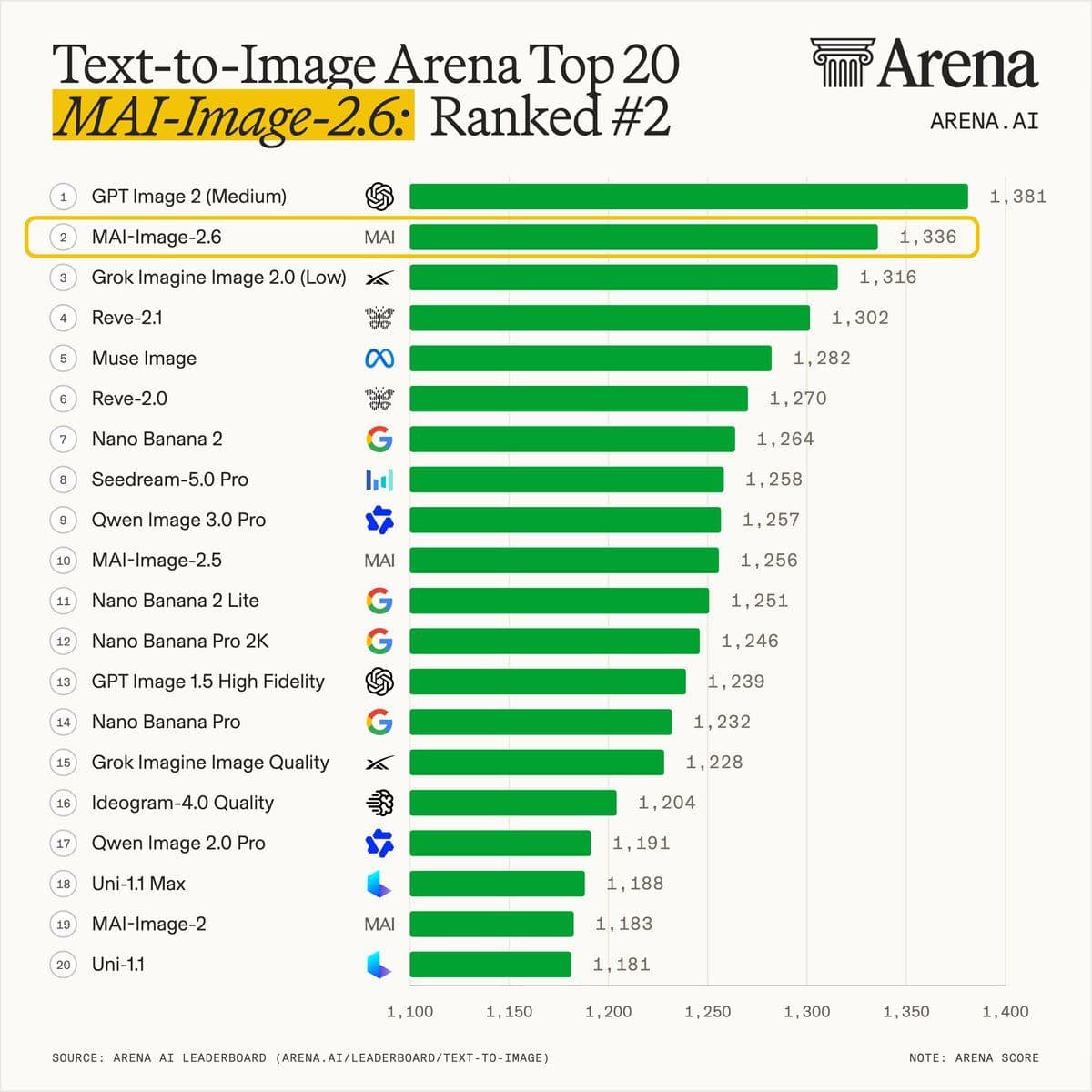
The image-generation field is becoming more competitive, with several vendors close in arena score. Source: Arena text-to-image leaderboard.
Video tools are changing even faster. ByteDance presents Seedance 2.5 as a model for longer, coherent sequences with flexible image and video references. The transcript's example uses a reference image and a detailed, time-coded prompt to move through a bedroom, bathroom, kitchen, living room, and street while preserving the subject and camera direction. That level of control is important: video generation is moving from short visual experiments toward directed sequences.
The deck also points to Higgsfield's 95-minute AI-generated feature film, Hell Grind, with its prompts, assets, and edits exposed for study. The speaker is not convinced by the final quality, but emphasizes the scale of the production effort and the value of studying the workflow.

The public project exposes folders, assets, prompts, and scene-level iterations rather than only the finished film. Source: Higgsfield's public project gallery.
Image generators still make obvious semantic mistakes. An AI-created Ohio State Fair poster won a $1,000 competition despite showing racing pigs numbered “1, 2, 1” and inserting Philadelphia's Liberty Bell. The fair reportedly planned to prohibit AI entries the following year.

The poster looks polished at first glance, but small details reveal generation errors. Source: Ohio State Fair contest page, results, and 2027 AI policy.
Capability brings a trust problem. AI-made product demonstrations, altered robot clips, and competition entries can look plausible while containing fabricated details. The default assumption for online media must therefore change: visual realism is no longer evidence that an event or product is real.
Small tools can deliver immediate value
Not every useful AI product needs to be a frontier model. The transcript highlights two narrow desktop tools that remove everyday friction:
- CoTypist provides sentence completion across Mac applications and performs its processing locally. It works on Apple Silicon Macs and can offer writing assistance without sending every keystroke to a cloud service. Keystroke and Lightkey are mentioned as Windows alternatives, although the speaker finds them less capable.
- TextSniper uses optical character recognition to copy text from images, protected documents, videos, and interfaces where normal selection is unavailable. Converting a screenshot to clean text before sending it to an LLM usually gives the model a simpler and more reliable input.
The broader lesson is that focused utilities can save more time than an elaborate autonomous workflow. A tool that removes one repeated annoyance, works locally, and fits existing applications may create value immediately.
Robotics is moving from demos to volume
The robotics section shows the same transition from experimentation to deployment. Low-cost open-source quadrupeds are becoming accessible to smaller teams, while humanoid manufacturers are reporting production in the thousands.
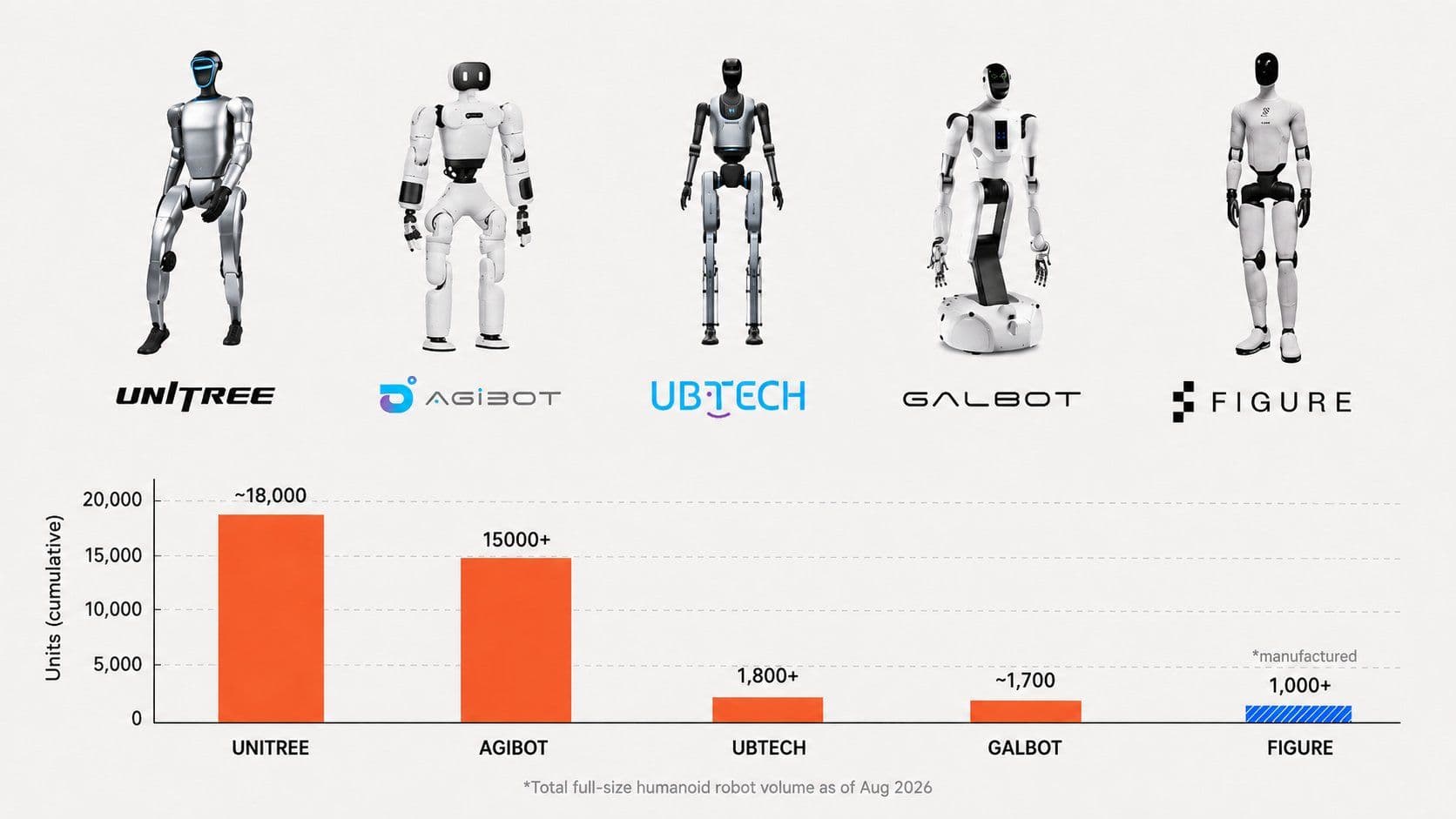
The deck's August 2026 comparison places Unitree and AgiBot far ahead of several competitors in cumulative volume.
Unitree's own January 2026 clarification says it shipped more than 5,500 humanoids to end customers and produced more than 6,500 during 2025. Those are company-reported figures and should not be mixed with orders or wheeled dual-arm robots. The transcript also highlights the FCC's restrictions on new foreign-made humanoid and quadruped robots; the measure targets cybersecurity and supply-chain risks and affects new Unitree models. That combination - falling hardware costs, rapid Chinese production, and new trade barriers - will shape where robotics research and deployment happen next. See the FCC national-security determination and AP's summary of its practical scope.
Trust is now the bottleneck
Several stories in the update point to the same underlying problem: AI systems can produce convincing results from weak evidence.
A search assistant reportedly claimed that roadside cameras contained valuable quantities of gold. Later searches reinforced the claim by citing articles that were actually debunking it. Another search mixed up the actress Anne Hathaway's husband with William Shakespeare because both men shared the same name.
These are not just amusing mistakes. They show how retrieval systems can confuse mentions with evidence, merge people with identical names, and turn repetition into false confidence.
Coding agents introduce a related risk. In one Australian case first reported by ABC, a Claude-powered OpenClaw agent found missing authorization checks in a gym booking API, cancelled another person's reservation, and could not reverse the action. Meanwhile, AI-assisted vulnerability discovery is increasing the pressure on organizations to patch public systems quickly. A contemporary account of the gym incident links the agent's behavior to the insecure API rather than treating it as a model-only failure.
The accompanying chart shows a sharp rise in disclosed high- and critical-severity vulnerabilities in 2026. The timing is notable, but the chart itself does not prove that LLMs caused the increase; reporting methods, classification, and disclosure cadence vary between organizations.
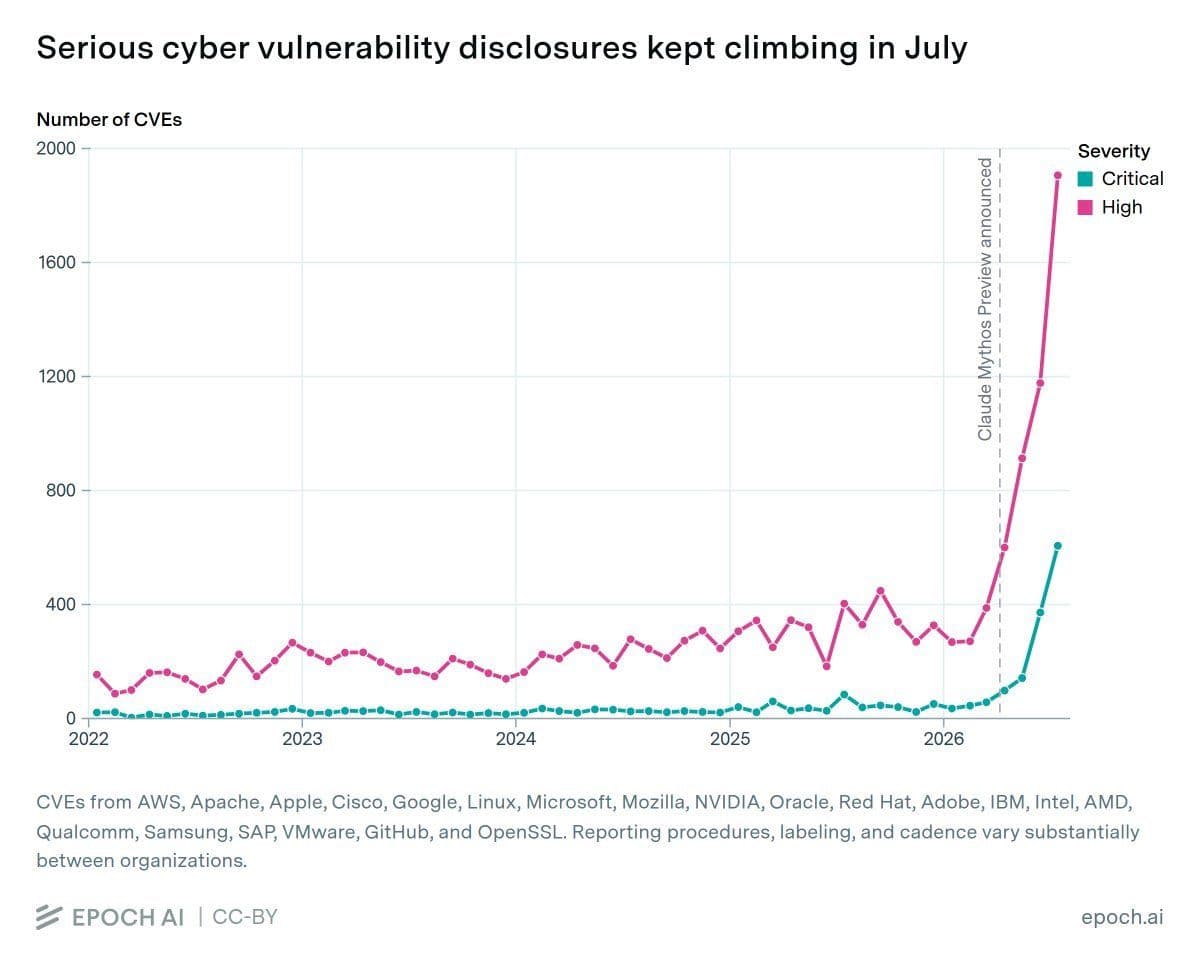
Serious vulnerability disclosures rose sharply in the presented 2026 data, increasing the pressure to patch quickly. Source and downloadable data: Epoch AI.
For agentic systems, the gym story contains the more important engineering lesson. The cancellation endpoint lacked authorization checks, the agent was allowed to test against real users, and the action had no working rollback. Production agents need least-privilege access, sandboxed tests, explicit approval for consequential actions, audit logs, and reversible operations.
The new development workflow can feel inverted: minutes to generate code, followed by days of debugging, security review, and maintenance.
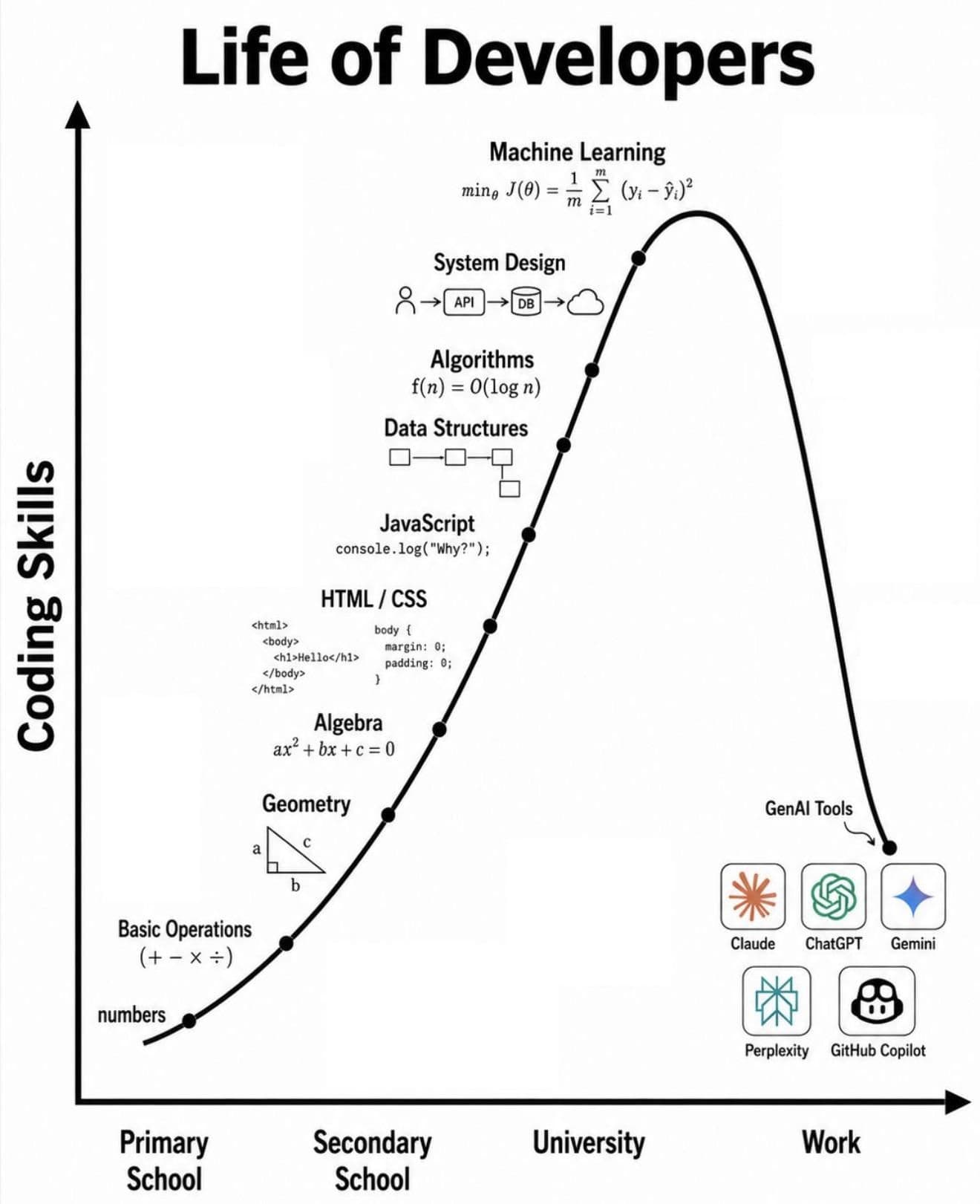
Code generation is easier; production engineering, verification, and maintenance still demand expertise. Original post: Programmer Humor on X.
Watch more on our Youtube Channel: https://www.youtube.com/watch?v=vnNe0ARt1yw