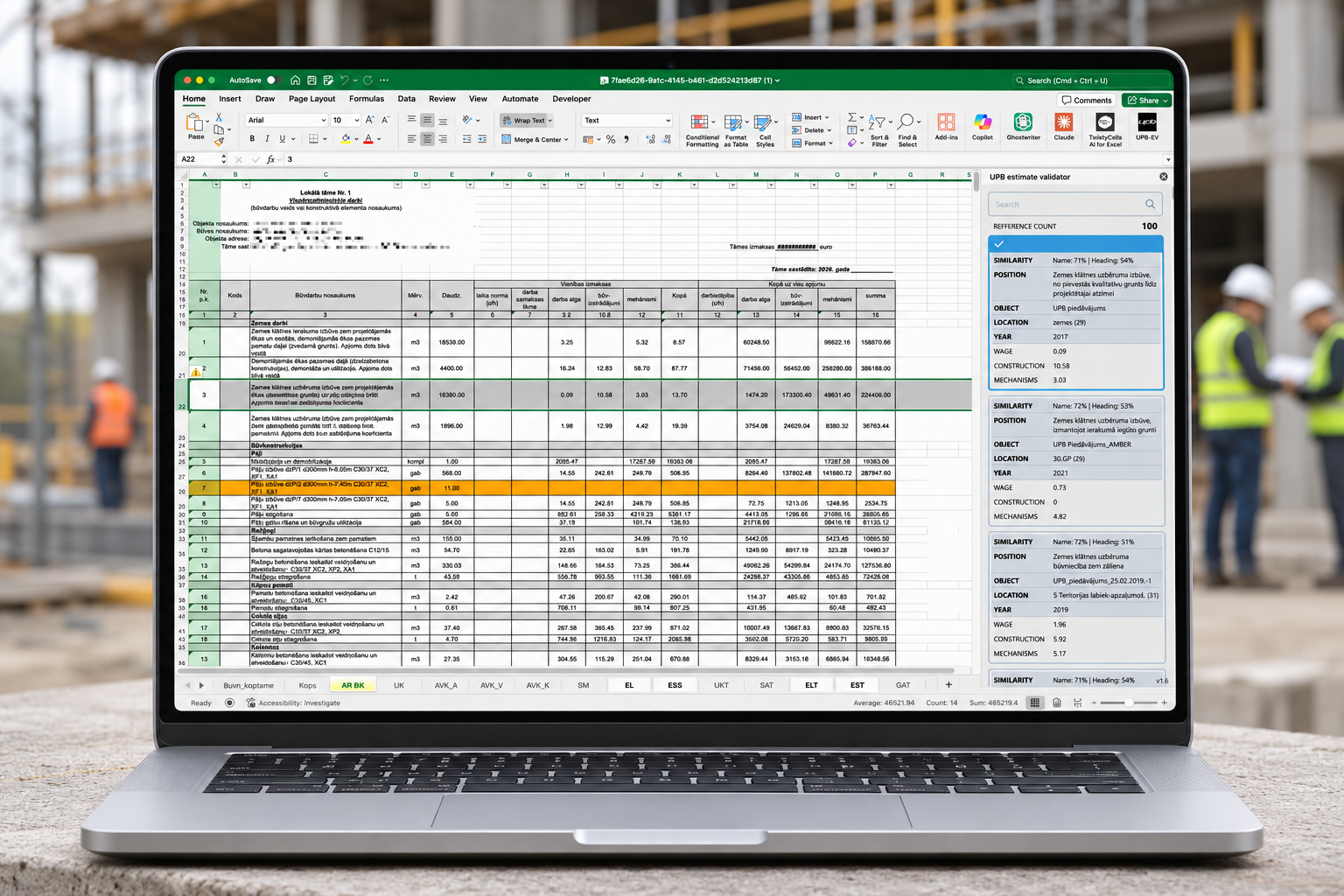
Before, UPB's estimators built every tender estimate manually. That took up to two weeks per tender (11 million euros projects) and limited how many tenders the team could bid on. Smaller tenders often weren't worth the effort.
UPB deployed an AI estimating system trained on its own 20 years estimating history. The system drafts each estimate automatically, matches positions to historical references and shows a confidence score for every line. Estimators review the drafts in a web panel, which also handles unstructured estimates and subcontractor agreements. They adjust positions directly in Excel through an add-in, so they never leave the tool they already use. The system runs alongside UPB's existing estimating, data and construction management systems, with no migration to a new platform and no workflow redesign. Deployment and validation took about 8 weeks. The AI team did most of the data cleaning and configuration, and UPB's estimators contributed domain knowledge and checked the results.
Results:
- Turnaround: down from up to 14 days to about 2 days of expert review per tender.
- Accuracy: 98.8% on a €5M construction project.
- Comparison with Claude: reached 68% accuracy on the same tender and used about 100 times more tokens.
- Capacity: annual output rose from 35 to 50 estimates (+43%) with the same core team and no new hires.
- Tender coverage: UPB's median project is €11M, and tenders up to €5M are now worth bidding on.
Every estimate adds to UPB's data, so pricing discipline and accuracy keep improving. Benchmark results apply to the dataset, system configuration and accuracy method that were tested.